Updated 2026-10-17 · 5 min read
What is a dildo? A plain-language guide to the forms
What a dildo is, how it differs from a vibrator, the main shapes and bases, and the size and material decisions that matter when buying one.
The simple definition
A dildo is a shaped object designed for internal penetration. It can be realistic or abstract, rigid or flexible, smooth or textured. The defining feature is the form and how it is used, not whether it contains a motor.
A vibrator is defined by the motor. Some vibrators are shaped like dildos and some dildos contain a motor, which is why the two categories overlap. If vibration is the main sensation you want, start with the vibrator category; if shape, pressure and penetration are the point, start here.
The main forms
Realistic — moulded to resemble a penis, often with a softer surface and a detailed finish. The visual realism is the appeal; the trade-off is usually a more porous material and more careful cleaning.
Textured — ridges, veins or bumps along the shaft. Texture changes friction, so it usually needs more lubricant than a smooth design.
Suction-base — a cup at the bottom grips smooth tile, glass or polished stone. This is the form that allows hands-free use.
Double-ended — a head at each end, usually flexible and longer than a standard dildo. It can be used alone or with a partner.
Wearable or strap-on — a flat base designed to sit in a harness. A suction cup is not a substitute for a harness base.
Motorised — the same overall shape with a motor in the shaft. It adds vibration but also charging and more parts to clean around.
Girth matters more than the number in the title
Listings lead with length because it is easy to measure. Diameter is what decides whether insertion is comfortable.
A 3.5 cm shaft and a 4.6 cm shaft are a genuinely different experience at the same length. If you are buying your first one, choose a narrower shaft rather than adding length you do not need.
The base decides how you can use it
A suction base is a functional choice, not a decorative one. It lets you attach the toy to a bathroom tile, a glass surface or the side of a bath. It will not hold on painted plasterboard, fabric or a textured wall.
A flat base is for holding or for a harness. A toy with no flared base should not be used anally, because it cannot be retrieved safely in the same way.
Material, in one paragraph
Silicone is non-porous, cleans thoroughly and lasts for years. Soft TPE or realistic blends feel closer to skin but are porous, so they need complete drying and a shorter replacement cycle. Use water-based lubricant with both; silicone lubricant can degrade silicone toys and is difficult to wash out of soft materials.
How to choose a first one
- Choose a diameter you are confident with, then pick the length
- Choose a suction base only if you want hands-free use on a smooth surface
- Choose silicone unless realism is the specific priority
- Choose a smooth finish for a first purchase; texture can come later
- Buy water-based lubricant at the same time
Mentioned in this post
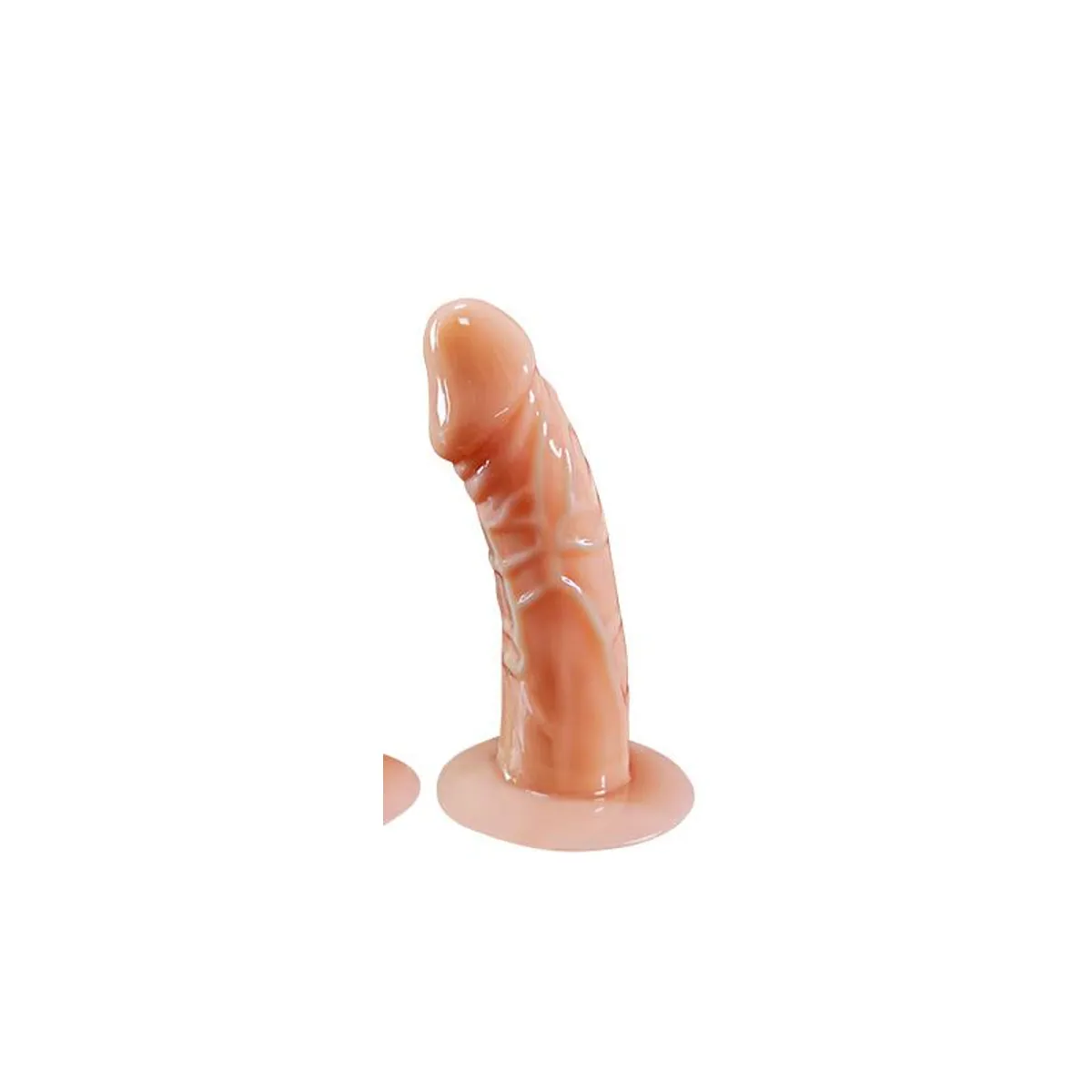
Suction-Cup Dildo — 13 × 3.8 cm
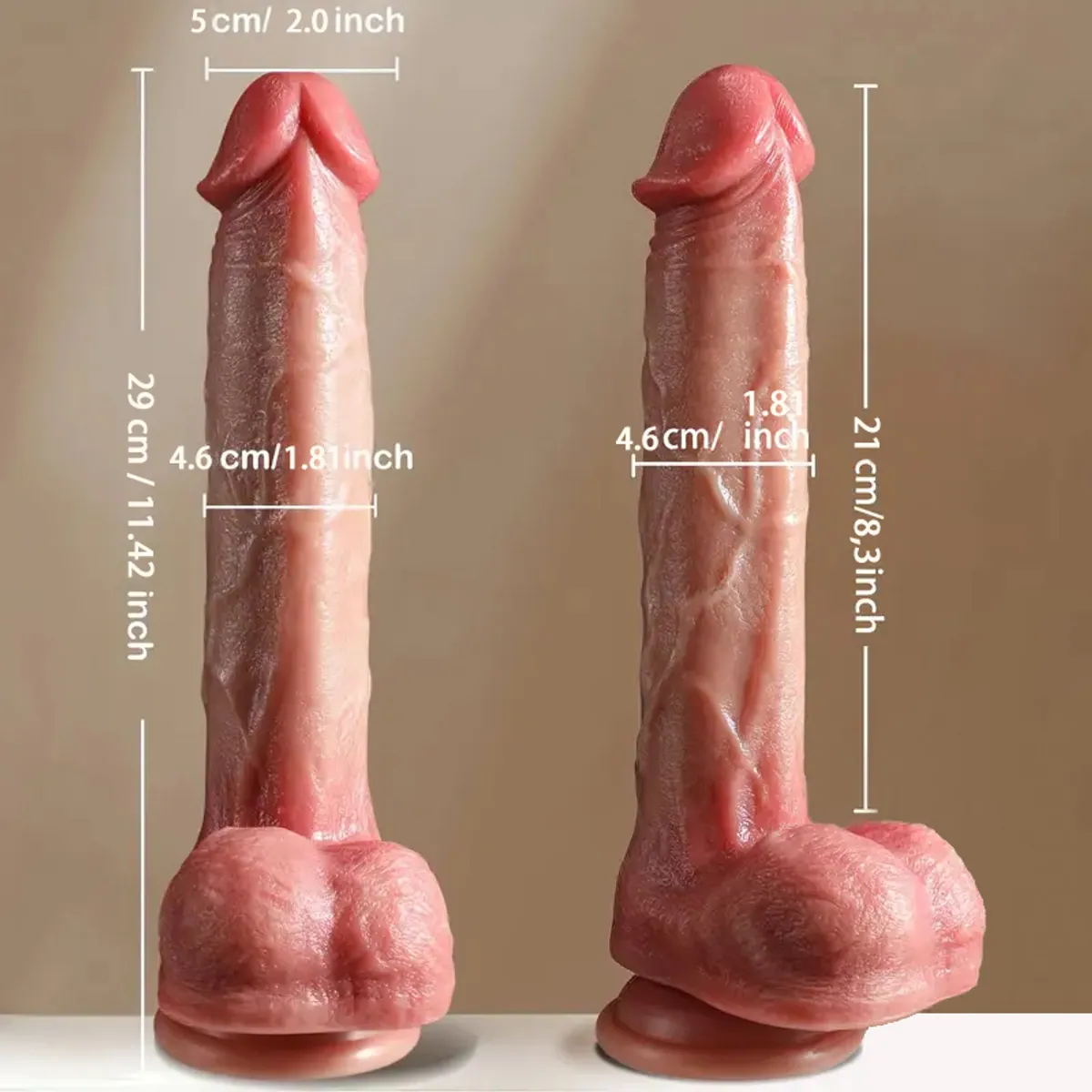
Manual Realistic Dildo — 4.6 × 21 cm, 810 g
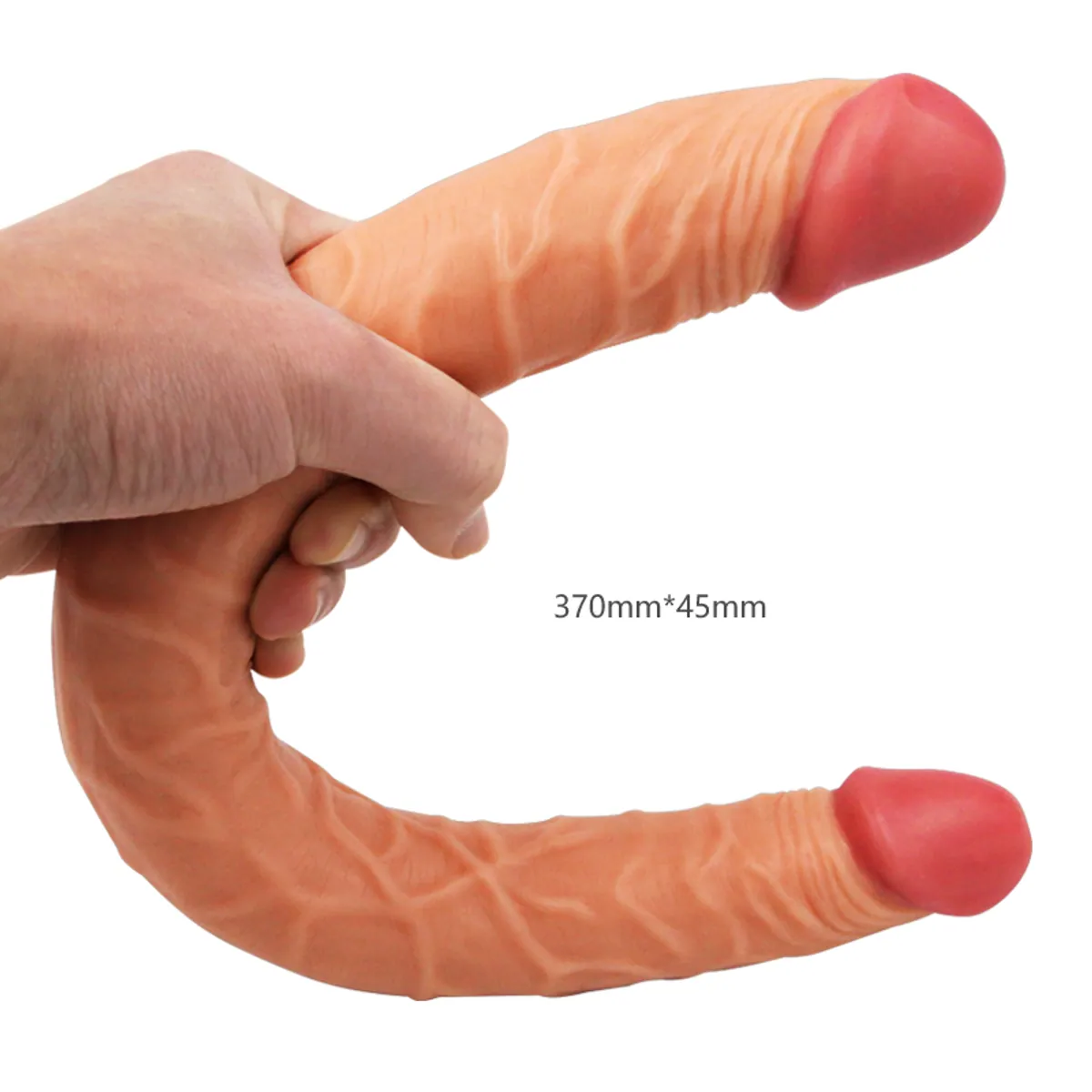
Double-Ended Dildo — 37 cm
Questions
Is a dildo the same as a vibrator? +
Not necessarily. A dildo is defined by its shape and use; a vibrator contains a motor. Some products are both.
What size should a beginner buy? +
Start around 3.5–3.8 cm in diameter and 13–18 cm in length. A narrower shaft is easier to adjust to than a longer one.
Can I use a suction dildo hands-free? +
Yes, on smooth, non-porous surfaces such as tile, glass and polished stone. It will not stick to painted or textured walls.
Related